
Ductless Mini-Split Installation in Cathedral City, CA
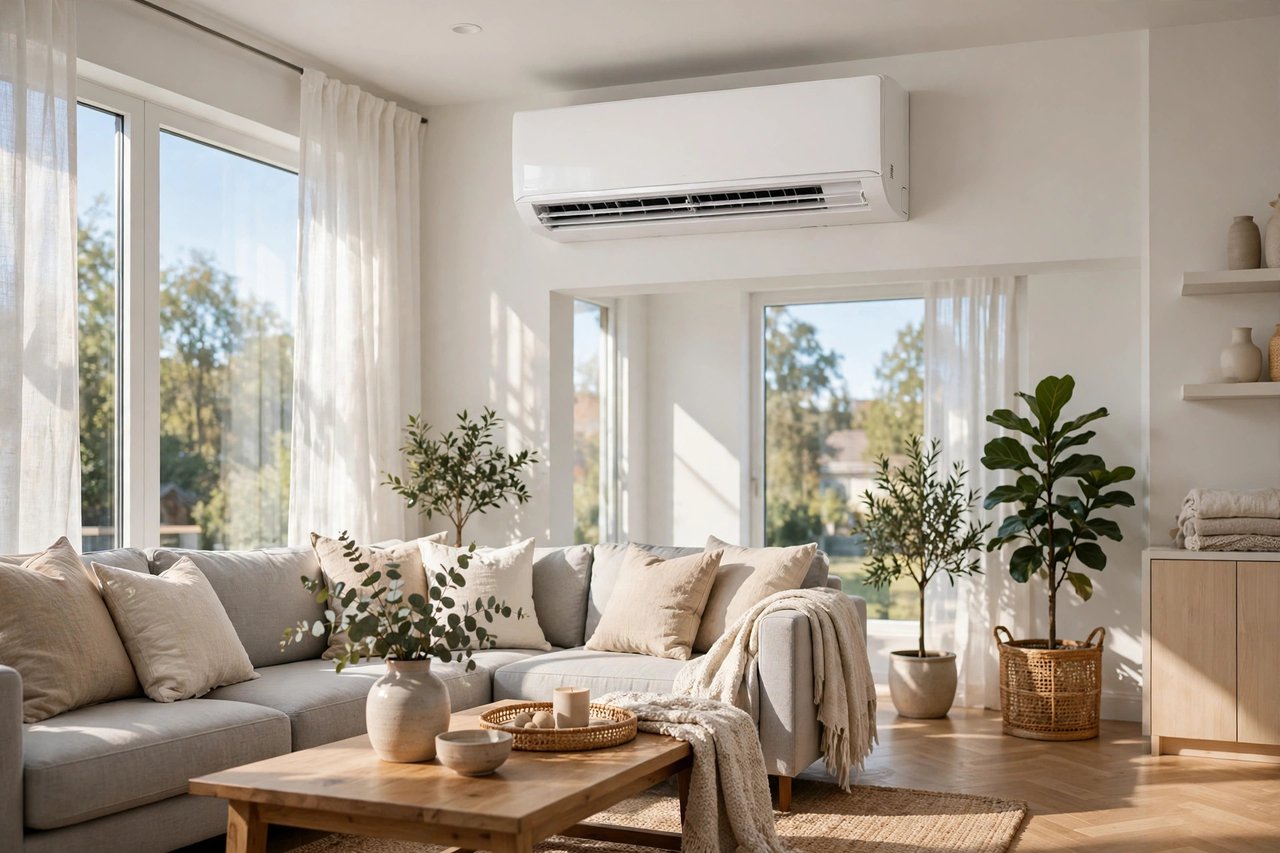
A ductless mini-split cools (and heats) individual rooms or zones using a compact outdoor unit connected to one or more wall-mounted indoor units — no ductwork required. It’s the go-to solution for Cathedral City additions, casitas, garage conversions, and homes where ducts don’t reach. Call (760) 232-8245 to connect with a local installer.
When a Mini-Split Makes Sense in the Desert
Central air is the default for most valley homes, but it isn’t always the right tool. Mini-splits earn their place in specific Cathedral City situations:
- Additions and casitas — extending ductwork to a new room is often more expensive than a dedicated mini-split zone.
- Converted garages and workshops — spaces that were never part of the home’s duct system.
- Older homes without ducts — many pre-war and mid-century valley homes rely on evaporative coolers or wall units; a mini-split adds real refrigerated air without tearing into walls and ceilings for duct runs.
- The one hot room — a west-facing bedroom or sunroom that the central system never cools evenly, no matter how long it runs.
- Room-by-room control — cool only the rooms in use instead of the whole house, which can trim summer bills in a climate where AC dominates energy costs.
How Mini-Split Installation Works
Installation is simpler than a full central system. The installer mounts the indoor unit(s), places the outdoor condenser, and connects them with refrigerant lines, power, and a condensate drain through a small opening in the wall. Because there’s no ductwork to build, many single-zone installations are completed far faster than a central AC installation in Cathedral City. Correct sizing still matters: a desert-rated load calculation ensures the system holds temperature on a 110°F afternoon without being oversized for the space.
Most mini-splits are heat pumps, so the same system that cools in August warms the room during chilly desert nights — useful in spaces that currently have no heat at all. If your whole home needs heating attention, our furnace and heating page covers the central-system side.
Mini-Splits vs. Central Air: An Honest Comparison
| Factor | Ductless mini-split | Central AC |
|---|---|---|
| Best for | Individual rooms, additions, homes without ducts | Whole-home cooling with existing ductwork |
| Temperature control | Independent per room/zone | One thermostat for the whole home (unless zoned) |
| Installation impact | Small wall opening per indoor unit; no ducts | Uses existing ducts, or requires duct installation |
| Energy losses | No duct losses | Leaky ducts can waste cooled air, especially in hot attics |
| Appearance | Visible wall-mounted indoor units | Vents only; equipment mostly hidden |
| Heating | Built in (heat pump) | Requires furnace or heat pump pairing |
For many homeowners the answer is both: keep a healthy central system for the main house and add a mini-split where ducts can’t reach. If your central system itself is failing, though, a mini-split isn’t a substitute for addressing it — compare the options with replacing your air conditioner in Cathedral City before spending money in the wrong place.
Cost Considerations
Mini-split pricing depends mainly on how many indoor zones you need and the capacity of each. A single-zone system for one room costs far less than a multi-zone whole-home setup, which can approach central-air territory. Because no ductwork is built, installation labor is often lower where ducts would otherwise be required. We don’t sell or install equipment — the local provider you’re connected with will measure your spaces, recommend a configuration, and give you a written quote. Like any AC equipment in the desert, mini-splits last longer and run cheaper with regular maintenance, including frequent filter cleaning in our dusty climate.
Choosing the Right Mini-Split Setup
Mini-splits come in two shapes. A single-zone system pairs one outdoor unit with one indoor unit — the right choice for a single casita, garage conversion, or stubborn hot bedroom. A multi-zone system connects several indoor units to one outdoor unit, so each room gets its own temperature control from shared equipment. Your installer will recommend a layout based on your floor plan and which rooms actually need cooling, and will size each zone with a load calculation so the system holds temperature on a 110°F afternoon without being oversized for the space.
Most mini-splits are heat pumps, so the same system that cools in August warms the room during chilly desert nights. That makes them a practical year-round answer for spaces that currently have no heating or cooling at all.
Mini-Splits for Hot Rooms and Additions
The rooms that benefit most are the ones central air serves worst: a west-facing bedroom that bakes every afternoon, a sunroom, a converted garage, a pool house, or a casita that was never connected to the main duct system. Extending ductwork to one of these spaces is often more disruptive and more expensive than a dedicated mini-split zone — a small wall opening instead of new duct runs through walls and ceilings. If the room already has ducts and the problem is control rather than reach, zoning or a smart thermostat may be the better answer; a provider who has seen the room can compare both honestly.
What Installation Day Looks Like
Installation is simpler than a full central system. The installer mounts the indoor unit (or units) on the wall, places the outdoor condenser on a pad or bracket, and connects them with refrigerant lines, power, and a condensate drain through a small opening in the wall. There is no ductwork to build, so a single-zone job is typically completed faster than a central installation. The installer then charges and tests the system, checks each zone's temperature, and walks you through the remote controls and filter routine before leaving.
Living With a Mini-Split
Mini-splits have washable filters in each indoor unit. In the desert's dusty air, rinse them regularly — a clogged filter chokes airflow and can freeze the indoor coil, just as with central air. Each zone has its own remote, so rooms in use can be cooled while empty rooms sit at a higher setpoint. And like any desert system, a mini-split lasts longer with annual maintenance: coil cleaning, drain checks, and a refrigerant check before the summer season.
Related guides: thermostats and zoning for Cathedral City homes · heat pump replacement in Cathedral City.
Mini-Split FAQs
Can a mini-split cool a home in Cathedral City’s heat?
Yes, when properly sized. Modern inverter-driven mini-splits are designed to keep cooling in temperatures well past 100°F, and because they run continuously at variable speed instead of cycling on and off, they hold a steadier temperature. Correct sizing for desert conditions is essential, which is why a load calculation matters here as much as with central air.
How many indoor units does a mini-split system need?
One indoor unit per zone. A single-zone system serves one room or open area — common for a casita, garage conversion, or stubborn hot bedroom. Multi-zone systems connect several indoor units to one outdoor unit to cool multiple rooms independently. Your installer will recommend a layout based on your floor plan and which rooms actually need cooling.
Do mini-splits also provide heat?
Most mini-split systems are heat pumps, so the same equipment provides efficient heating during Cathedral City’s mild winter nights. That makes them a practical year-round solution for spaces that currently have no heating or cooling at all.
Mini-split or central AC — which is right for my home?
If your home has good ductwork and needs whole-home cooling, central air is usually the simpler long-term answer. Mini-splits shine where ducts are absent, damaged, or impractical — additions, older homes, and individual hot rooms — and when you want room-by-room temperature control. A local provider can compare both honestly for your situation; if a whole new central system is the better fit, our AC replacement page covers that path.
Thinking About a Mini-Split?
Talk through your floor plan with a local installer. We’ll connect you with an independent provider who can size a system for your casita, addition, or hot spots — and quote it in writing.
Call Now — Connect With a Local AC Pro: (760) 232-8245